Stories Without Borders: Exploring Tamil and Telugu Cinema at IFFI 2026
Goa, 17 November 2026
Goa, 17 November 2026
Tamil and Telugu cinema feature prominently at the 57th International Film Festival of India (IFFI) 2026, presenting a diverse range of narratives exploring social issues, family relationships, human values, personal struggles and cultural traditions. The selection brings together stories from both languages across feature and non-feature categories, addressing themes ranging from technology and education to environmental conservation, family relationships, individual aspirations and political life.
Have a look at the Tamil Films
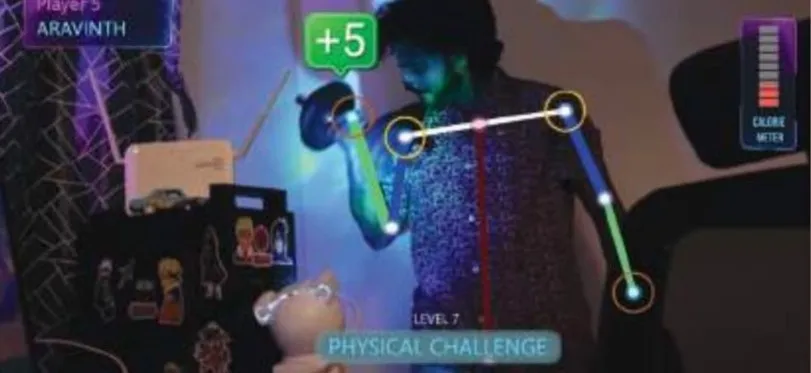
The Tamil selection includes stories set against both contemporary and traditional social settings. Scroll, directed by Kannan S, follows Aravind, a young man addicted to his smartphone, whose life takes a disturbing turn after he joins an app called Dopa Rush. The app challenges users to overcome smartphone addiction through a series of tasks and rewards. However, as the challenges become increasingly strange and disturbing, the game begins to control the participants' lives, transforming an attempt to break an addiction into a frightening experience.
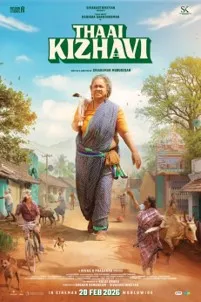
Family relationships and unresolved conflicts form the central theme of Thaai Kizhavi (God Mother), directed by Sivakumar Murugesan. The film tells the story of Pavunuthaayi, a strong-willed 70-year-old woman living with her daughter and grandson in a small village. Feared by some and respected by others, she has been separated from her three sons for many years. When she suddenly falls seriously ill, her sons return home, bringing back unresolved family conflicts and painful memories. As the past resurfaces, a long-hidden secret gradually comes to light, changing the family's understanding of their relationships.
Addressing the issue of access to education, Arivu, directed by Sathyashiva, is set in 1996 and follows Kathir, a young teacher posted to a remote tribal village in the Western Ghats. He discovers that girls are denied education because villagers believe it will anger the village deity. Determined to change this, he secretly teaches a group of girls aged 13–14 who have never attended school. As their examinations approach, Kathir helps them overcome their fears and social restrictions, enabling them to take their first steps towards education.
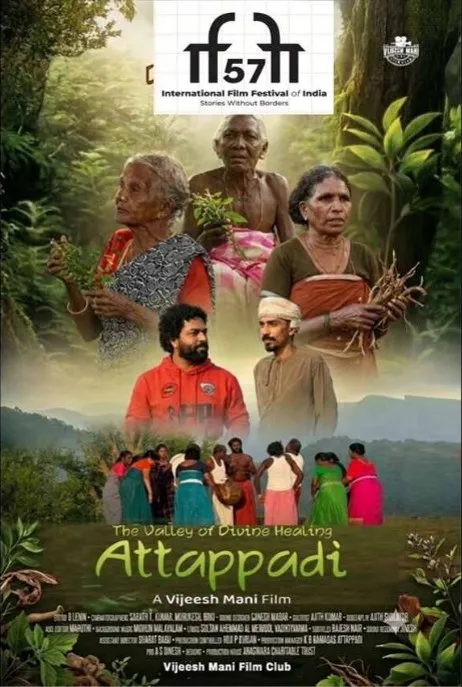
The Tamil selection also explores indigenous knowledge and traditional practices. Attappadi, directed by Vijeesh Mani, explores the traditional healing practices of indigenous communities in Kerala's Western Ghats. The film follows Sultan Ahmed Al Mehmoudi, who travels from Arabia to explore the medicinal knowledge and forest traditions preserved by the people of Attappadi. Guided by filmmaker Vijeesh Mani, he meets traditional healers and elders and learns about their relationship with the forest. What begins as a search for medicinal knowledge develops into a journey into the community's way of life and heritage.
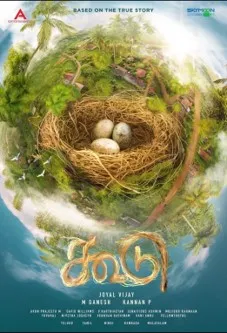
Environmental conservation and community participation are central to Koodu (Nest), directed by Joyal Vijay. Set in Vachathi, Tamil Nadu, a power cut leads to the discovery of a sparrow's nest with eggs inside a village transformer. Guided by village head Agathiyan, agriculture graduate Kathir and the villagers decide to remain without electricity for 35 days to protect the birds. Their decision faces strong opposition and attempts at sabotage by the local VAO and Lingam, driven by personal grudges. Despite these challenges, Kathir and the villagers make difficult sacrifices to keep the nest safe.
Check out the Telugu Films
The Telugu selection presents stories addressing environmental concerns, family relationships, love, personal aspirations, human values and politics. Sing Geetham (Sing a Song), directed by Singeetham Srinivasa Rao, follows Pratap Mannem, who returns to the mining village of Kuberpuram to claim his share of the gold mines left by his father. He soon clashes with a former business partner whose expansion plans threaten to destroy the village's last tree. As greed and conflict spread, Pratap discovers the truth about his family's past and begins to change. The villagers eventually realise the importance of unity, sacrifice and protecting nature.
Family relationships, separation and reconciliation are explored in Mana Shankara Vara Prasad Garu (Our Mr. Shankar Varaprasad), directed by Anil Ravipudi. The family drama centres on Shankar Vara Prasad, a dedicated national security officer, who puts his duty before his family, resulting in separation from his wife and children. Six years later, he attempts to rebuild their relationship by joining the school where his children study. When his family faces a serious threat, he is assigned to protect them. As he uncovers the danger, he must confront his past, save his loved ones and win back their trust.
Love and loss form the subject of Chennai Love Story, directed by Ravi Varma Namburi. The film follows Nivi, who is struggling to overcome the pain of a past relationship. She meets Steven, an orphan whose love and kindness gradually bring happiness back into her life. Despite their differences, they fall in love and decide to marry. However, Steven dies in an accident on their wedding day. Unable to accept his sudden loss, Nivi is overwhelmed by grief and anger, struggling to understand why he had to leave her despite his promise to stay by her forever.
The pursuit of personal aspirations is the focus of Why, Vani?, directed by Dhanush Dandu. The film tells the story of Vani, a young editor in Hyderabad who feels unfulfilled in her career. When she gets an opportunity to work on a documentary in Mumbai, she decides to pursue her dream of filmmaking. However, her decision creates challenges in her relationships with her boyfriend Arun and filmmaker Sahith, whose compromises on the project reflect their own fears. Struggling with family expectations and guilt, Vani eventually gains a renewed understanding of her choices and follows her dream.
Win, directed by Praveen, explores the importance of perspective and self-discipline through the game of chess. The film centres on Napoleon, an 18-year-old who wants to win every chess game after years of strict training by his mother. Confident in his abilities, he enters a major chess tournament but loses to Gayatri, a calm ten-year-old girl. Unable to accept defeat, he challenges her again. Through their conversations, Gayatri helps him understand that playing well matters more than winning. She introduces him to the teachings of the Bhagavad Gita, encouraging him to perform his duty without becoming attached to the result. Napoleon gradually learns to control his ego and view chess differently.
Politics, ideology and the dynamics of friendship form the backdrop of Mayasabha, directed by Deva Katta. Set in Andhra Pradesh from the mid-1970s, the series follows two young men, Kakarla Krishnama Naidu (KKN), an idealistic student leader, and M.S. Rami Reddy (MSR), a young man from a powerful family. Despite their different backgrounds, they become friends and enter politics with hopes of bringing change. However, they soon encounter the realities of political life, including caste divisions, corruption, money and power struggles. As their influence grows, their ideals are tested and personal ambitions begin to affect their friendship. The series explores politics, ideology, power and whether two friends can remain united when competing for the same position.
Bhakta Kannappa: A Golden Jubilee Celebration
The Telugu film selection also includes a special presentation in the Golden Jubilee section of IFFI 2026. Bhakta Kannappa, directed by Bapu, marks 50 years since its release on 26 May 1976. The restored print returns as part of the Festival's Golden Jubilee celebration.
The film retells the legend of Kannappa Nayanar, the legendary Shaiva devotee. Arjuna is reborn as Thinnadu, an atheist hunter raised by a tribal chief. He wins the hand of the chief's daughter, Neela, but his refusal to bow before the village deity forces him to leave his people. His life changes when he meets Lord Shiva and gradually learns the true depth of devotion. In the climax, he gives his own eyes to stop the Shiva Lingam from bleeding, an act that carries devotion beyond ritual and convention. Originally filmed in Kannada, the film won the National Film Award for Best Audiography and is remembered for its grandeur and outdoor scale.
Together, these stories reaffirm the spirit of this year's theme, Stories Without Borders. Told in Tamil and Telugu, they travel far beyond the linguistic and cultural worlds in which they are rooted. Whether exploring the struggles of a young teacher, the bonds of family, the pursuit of dreams, the protection of nature, the complexities of political life or the timeless power of devotion, these films speak to experiences and emotions that audiences everywhere can relate to. They remind us that while language may shape the way a story is told, it need not limit how it is understood or felt. Through these diverse cinematic voices, IFFI celebrates the power of cinema to transcend linguistic and cultural boundaries, bringing stories from different worlds closer to audiences everywhere.
* * *
PIB IFFI Team | Rajith Chandran/ Lekshmi Priya/ Andrew/ Darshana Rane
Related Stories